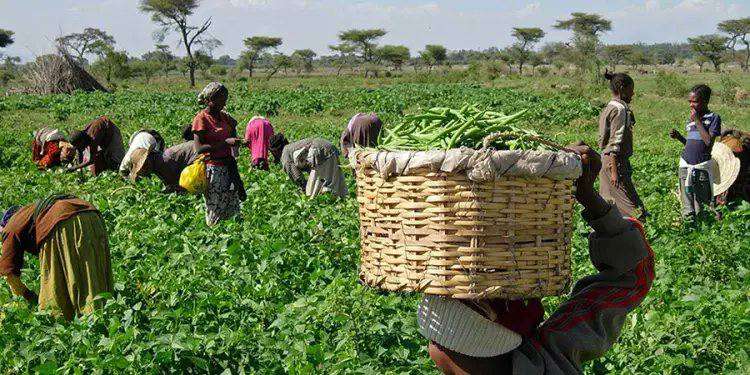
Fresh concerns have emerged over agricultural financing in Nigeria after a leading agribusiness executive accused financial institutions of diverting funds intended for farmers into the real estate sector, worsening the country’s already fragile food production system.
The allegation was made by Wale Oyekoya, former Chairman of the Agriculture and Non-Oil Group of the Lagos Chamber of Commerce and Industry and Managing Director of Bama Farms Limited, during the 2026 Agriculture and Agro-Allied Summit held in Lagos.
The summit, organised by the Nigerian-British Chamber of Commerce, focused on the theme: Ensuring Food Security in Nigeria: Innovations, Investments and Policy for a Resilient Future.
Speaking during a panel session, Oyekoya claimed that banks are a major obstacle to agricultural growth in Nigeria, alleging that intervention funds meant to support farmers are often redirected away from the sector.
According to him, the financing challenges confronting Nigerian farmers are not due to a lack of available data or inability to identify genuine beneficiaries. He argued that government ministries, cooperatives, and farmer clusters already maintain databases of registered farmers across states.
Oyekoya stressed that the bigger problem lies in implementation gaps, weak financial commitment, and what he described as poor management of agriculture-focused funding. He said farmers continue to struggle with access to affordable capital despite multiple intervention schemes because the funds do not always reach intended recipients.
However, not everyone at the summit agreed with his position. Utomi Ezinwa, Manager of Agribusiness and Non-Oil Export at Union Bank of Nigeria, offered a different perspective, arguing that financing smallholder farmers remains difficult largely because of operational risks within the agricultural sector.
According to Ezinwa, fragmented production systems and the lack of organised market structures make lenders cautious. He explained that banks are more willing to provide funding when farmers operate through cooperatives, associations, or anchor-based arrangements where market access is guaranteed.
He added that one of the biggest issues facing agricultural financing is not just access to loans, but also the high cost of financing, which significantly affects productivity and profitability for farmers.
The summit also featured remarks from Kola Masha, Founder and Managing Director of Babban Gona, who warned that Nigeria’s food security crisis could deepen if urgent investments are not made in agriculture and youth empowerment.
Masha highlighted Nigeria’s strong agricultural potential, noting that the country has over 85 million hectares of arable land, substantial water resources, and a large labour force. Despite these advantages, he said millions of smallholder farmers remain disconnected from finance, technology, and access to profitable markets.
He pointed out that many farmers still lack the capital needed to purchase quality inputs and improve productivity, limiting output and worsening food inflation.
Masha also warned that insecurity, climate-related disruptions, and rising food costs are already worsening food insecurity across parts of Northern Nigeria, particularly in states such as Zamfara State, Sokoto State, Katsina State, Borno State, Adamawa State, and Yobe State.
He noted that agriculture contributes between 25 and 30 percent directly to Nigeria’s GDP, with its broader value chain accounting for even more when processing, logistics, and agricultural inputs are considered.
Beyond economics, Masha linked agriculture directly to national security, warning that rising youth unemployment and declining rural opportunities could create deeper instability if not addressed.
He argued that agriculture could become a major employment driver for young Nigerians if the sector becomes more productive, profitable, and technology-driven.
Since its launch in 2012, Babban Gona says it has supported over 500,000 farmers, deployed more than $250 million into rural communities, and maintained repayment rates above 99 percent.
In his opening remarks, President and Chairman of Council of the Nigerian-British Chamber of Commerce, Abimbola Olashore described food security as essential not only for economic growth but also for national stability.
He identified climate change, poor infrastructure, limited mechanisation, post-harvest losses, and restricted access to finance as some of the biggest barriers slowing agricultural transformation in Nigeria.
Despite these challenges, Olashore said the country still has significant opportunities to unlock growth through innovation, targeted investment, and policy reforms capable of strengthening food systems and boosting agro-export potential.
As Nigeria continues to battle inflation, insecurity, and food shortages, the conversation around agricultural financing is becoming increasingly urgent, with stakeholders now calling for greater transparency, accountability, and smarter investments to ensure farmers receive the support needed to feed the nation.
Discover more from Scoop Hub
Subscribe to get the latest posts sent to your email.