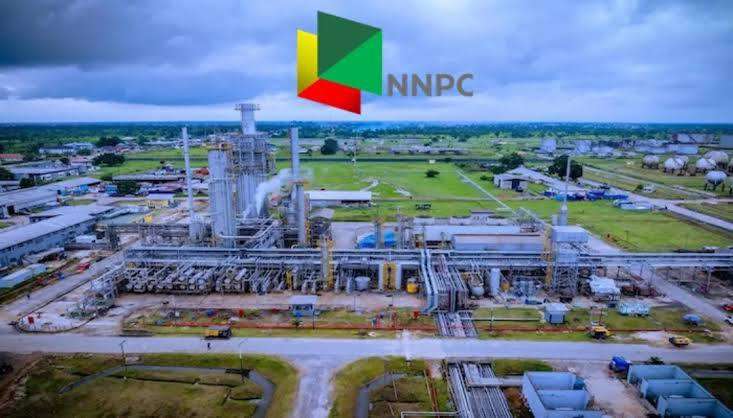
Nigeria’s push to revive its struggling state-owned refineries has taken a new turn as the Nigerian National Petroleum Company Limited (NNPCL) signed a fresh agreement with two Chinese companies to support the restart, operation, and possible expansion of the Port Harcourt and Warri refineries.
The agreement, signed as a Memorandum of Understanding (MoU), was reached with Sanjiang Chemical Company Limited and Xingcheng (Fuzhou) Industrial Park Operation and Management Co. Ltd during a meeting held in Jiaxing City, China, on April 30, 2026.
According to NNPCL, the partnership is designed to accelerate the long-delayed rehabilitation of the Port Harcourt and Warri refineries while introducing a new technical equity partnership model aimed at ensuring long-term efficiency and profitability.
The MoU was signed by NNPCL Group Chief Executive Officer, Bashir Bayo Ojulari, alongside Chairman of Sanjiang Chemical Company, Guan Jianzhong, and Chairman of Xingcheng Industrial Park, Bill Bi.
In a statement released by NNPCL’s Chief Corporate Communications Officer, Andy Odeh, the company described the deal as a major milestone in its refinery transformation agenda. The partnership is expected to go beyond completing rehabilitation work, extending into the full operation, maintenance, and potential expansion of both refineries.
Unlike previous turnaround maintenance programmes that consumed billions of naira with little long-term success, NNPCL says this new model shifts away from traditional contractor-based rehabilitation toward a performance-driven partnership.
Under the proposed technical equity structure, the Chinese firms are expected to bring engineering expertise, operational management, and investment capacity, with their financial returns linked directly to refinery performance. This approach is intended to ensure accountability, efficiency, and sustainable output.
Ojulari said the agreement followed more than six months of technical and commercial discussions between NNPCL and the Chinese companies.
He explained that the new arrangement reflects a deliberate strategy to attract partners with a direct stake in the success of Nigeria’s refining assets.
According to him, NNPCL is no longer interested in simply funding rehabilitation projects without guaranteed results. Instead, the company is seeking technical partners willing to operate, optimise, and help guarantee refinery performance over the long term.
Beyond refinery operations, the agreement also opens the door to the development of co-located petrochemical and gas-based industrial hubs around the refinery complexes.
This could transform both Port Harcourt and Warri into integrated energy and industrial centres capable of producing cleaner fuels, petrochemicals, fertilizers, and other higher-value petroleum products in line with global industry standards.
The move aligns with Ojulari’s earlier comments at the Nigeria International Energy Summit 2026, where he advocated for global technical partners to take equity positions in Nigeria’s refining assets.
At the summit, he stressed that Nigeria’s refinery problems are not only financial but also deeply technical and operational, requiring experienced partners with proven expertise.
For decades, Nigeria’s refineries in Port Harcourt, Warri, and Kaduna have struggled with poor performance, repeated shutdowns, and costly rehabilitation failures. As a result, Africa’s largest oil producer has remained heavily dependent on imported refined petroleum products despite its vast crude oil resources.
Successive governments have attempted to restore the refineries, but operational inefficiencies and lack of sustainable management have continued to undermine progress.
The current administration has made refinery revival a central part of its energy security strategy, alongside support for private refining projects such as the Dangote Refinery.
NNPCL’s latest agreement with the Chinese firms signals a stronger shift toward long-term operational partnerships rather than one-off rehabilitation contracts.
If successfully implemented, the deal could help reduce Nigeria’s dependence on fuel imports, improve domestic fuel supply, conserve foreign exchange, and reposition the country’s refining sector as a stronger contributor to economic growth.
For many Nigerians, however, the real test will not be in the signing ceremony but in whether this latest promise finally translates into fully functional refineries after years of failed revival efforts.
Discover more from Scoop Hub
Subscribe to get the latest posts sent to your email.