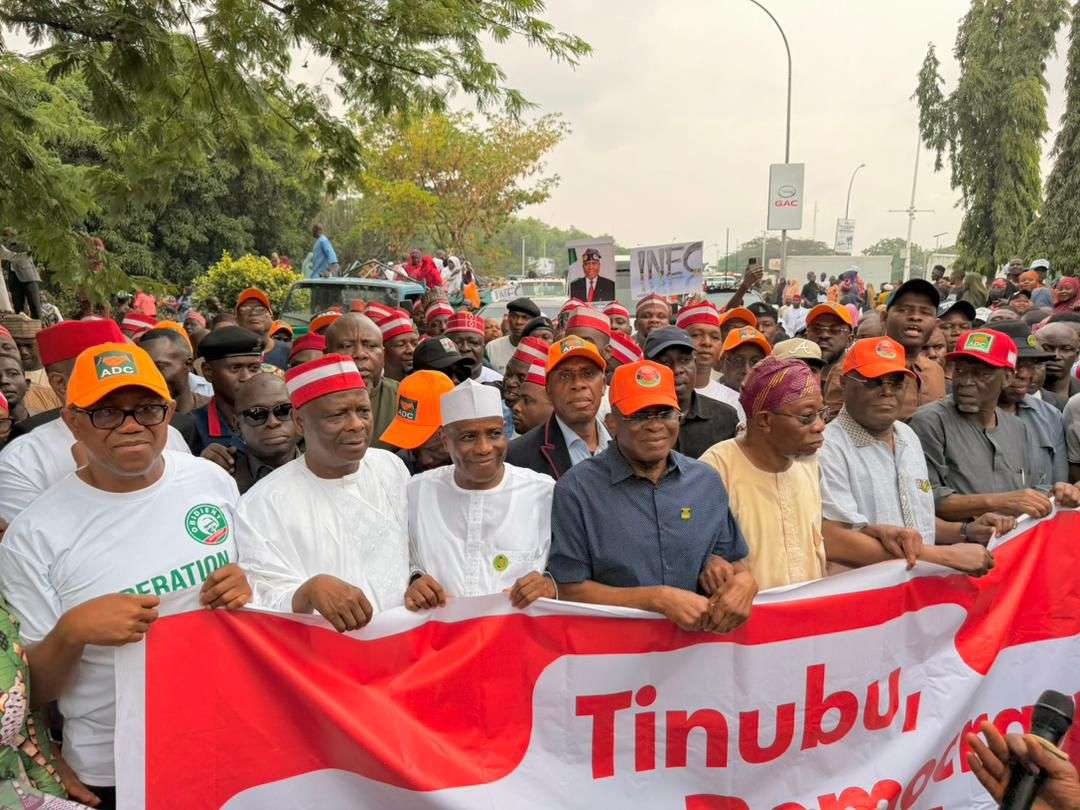
Nigeria’s political landscape witnessed a dramatic moment in Abuja as top opposition figures rallied under the banner of the African Democratic Congress to protest against the Independent National Electoral Commission over its stance on the party’s leadership crisis.
The demonstration, widely known as #OccupyINEC, drew a powerful lineup of political heavyweights, including Atiku Abubakar, Peter Obi, Rabiu Kwankwaso, Rotimi Amaechi, Rauf Aregbesola, and Aminu Tambuwal. The protest took place at Maitama Roundabout, where hundreds of party supporters and members of the Kwankwasiyya movement gathered to voice their concerns.
At the heart of the protest is INEC’s decision to suspend recognition of correspondence from both factions of the ADC, led by David Mark and Nafiu Bala, following a Court of Appeal ruling on the party’s internal leadership dispute.
The commission’s move has been strongly criticized by party leaders and opposition figures, who argue that it undermines democratic principles and interferes with the autonomy of political parties.
The atmosphere at the protest was charged with symbolism and defiance. Demonstrators sang Nigeria’s former national anthem, “Arise, O Compatriots!”, despite its recent replacement by the reinstated independence-era anthem. According to party insiders, the act was a deliberate statement reflecting dissatisfaction with recent political developments.
Placards bearing messages of support for David Mark were prominently displayed, signaling where many protesters stand in the ongoing leadership tussle. The rally also featured speeches calling for unity and vigilance in protecting Nigeria’s democratic institutions.
Speaking on behalf of the group, Peter Obi delivered a strong message, urging Nigerians to stand up for democracy and resist actions that could weaken the nation’s political framework. His remarks echoed a broader sentiment among opposition leaders, who see the situation as a critical test of democratic integrity in the country.
The protest highlights growing tensions between political parties and electoral authorities, as well as deeper concerns about governance and institutional independence. As the dispute unfolds, the actions of INEC and the response from political stakeholders will likely shape the next phase of Nigeria’s democratic journey.
Discover more from Scoop Hub
Subscribe to get the latest posts sent to your email.