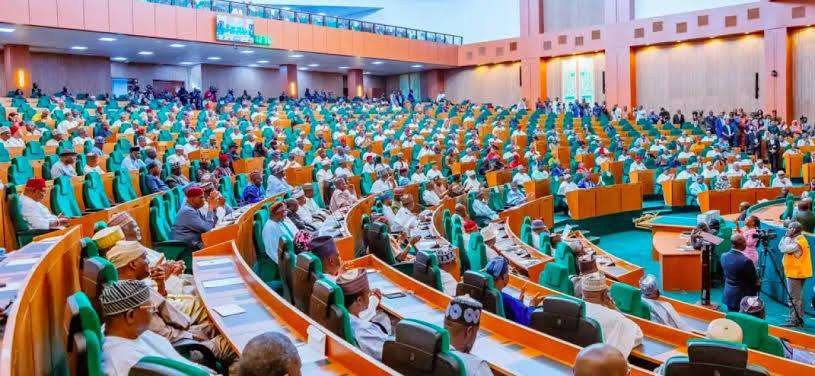
Nigeria’s House of Representatives has called on the Federal Government of Nigeria to reconsider its decision to invalidate and suspend degrees obtained from tertiary institutions in the Republic of Benin and Togo.
Lawmakers raised the concern during deliberations on a motion of urgent public importance, warning that the blanket ban could have severe unintended consequences for thousands of Nigerian graduates who legitimately studied in recognized institutions within the two neighbouring countries.
The lawmakers acknowledged the efforts of the Federal Ministry of Education to tackle academic fraud and eliminate illegal degree rackets operating across borders. However, they argued that the current policy risks punishing students who obtained their qualifications through legitimate academic programmes.
According to the House, many Nigerian students spent several years studying in accredited French-speaking universities in the region, investing significant time and financial resources into their education. A sweeping invalidation of their certificates, lawmakers said, could effectively sideline qualified professionals and create what they described as a potential “lost generation” of graduates.
Members of the House also pointed out that diplomatic engagements had largely cleared institutions in Togo of systemic wrongdoing, raising questions about why the country’s educational system remains affected by the suspension.
Rather than imposing a total ban, lawmakers urged the government to adopt a more targeted approach. They recommended identifying and blacklisting specific institutions involved in academic fraud while allowing degrees from verified and accredited universities to remain valid.
The issue has had immediate implications for many Nigerians. The suspension has stalled the career advancement of civil servants and private sector employees who hold these degrees. It has also affected the eligibility of graduates seeking to participate in the National Youth Service Corps, a key requirement for many professional opportunities in the country.
To address the situation, the House proposed strengthening the evaluation and accreditation systems within the education ministry. Lawmakers suggested that foreign degrees should be assessed individually through proper verification processes rather than through a broad nationwide ban.
The House emphasized that maintaining the integrity of Nigeria’s education system remains essential, but warned that efforts to combat fraudulent institutions must not come at the expense of students who followed legitimate academic pathways.
As part of its resolution, the House directed its Committee on Education (Tertiary) to engage with the National Universities Commission and the Ministry of Education to develop a more balanced framework for evaluating certificates obtained from foreign institutions.
The outcome of these discussions could determine whether thousands of Nigerian graduates regain recognition for their academic qualifications while ensuring stricter oversight against fraudulent degree schemes in the future.
Discover more from Scoop Hub
Subscribe to get the latest posts sent to your email.