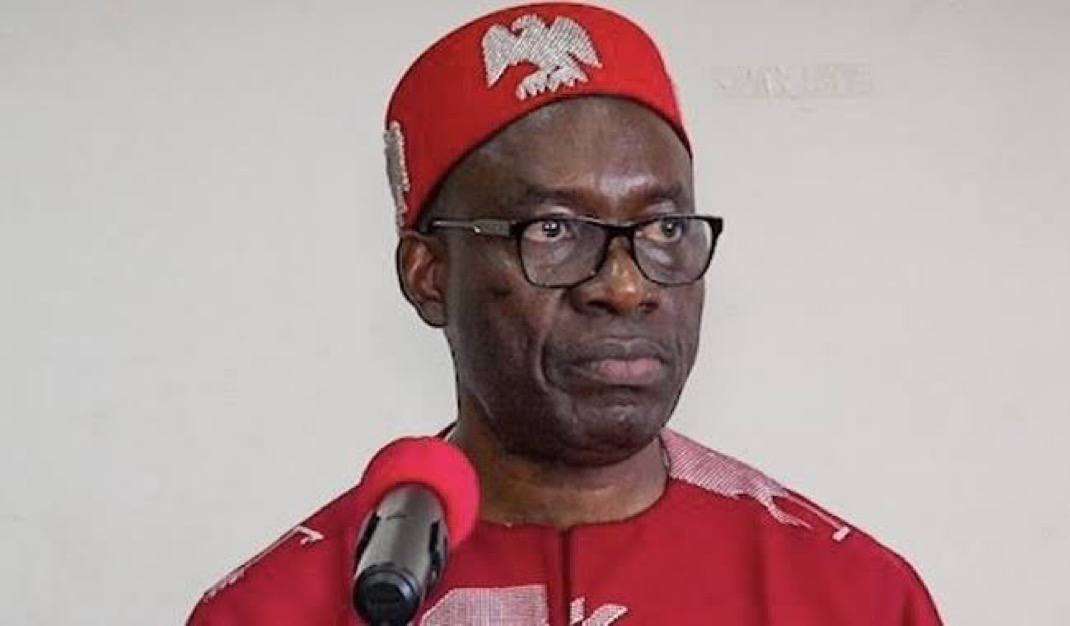
Tension is rising in Anambra State after the Indigenous People of Biafra (IPOB) called on traders at the Onitsha Main Market to resume business on Tuesday, openly challenging a one-week market closure ordered by Governor Prof. Chukwuma Soludo.
Governor Soludo had earlier on Monday directed that the market be shut from Tuesday, citing traders’ failure to comply with the state government’s instruction to ignore the long-standing Monday sit-at-home order.
The governor issued the directive during an on-the-spot visit to the market, accompanied by government officials and security personnel. He warned that the closure could be extended if traders continued to defy the state’s position, adding that security agencies had already sealed the market to enforce compliance.
Soludo described the move as part of a broader struggle to reclaim economic life in the South-East, where sit-at-home disruptions have repeatedly affected commercial activities and livelihoods.
However, in a strongly worded statement released late Monday, IPOB spokesperson Emma Powerful rejected the governor’s action and urged traders and shop owners to reopen their businesses. According to IPOB, the livelihoods of traders were not created or funded by the state government and should not be subjected to political enforcement.
The group declared that traders in Anambra State should resume normal business activities on Tuesday, January 27, 2026, insisting that the call was an exercise of what it described as the people’s fundamental right to earn a living. IPOB argued that traders received no government support during previous economic hardships, including the COVID-19 lockdowns, and had survived through resilience and self-reliance.
The statement also linked the ongoing economic tension in the South-East to the continued detention of IPOB leader, Mazi Nnamdi Kanu, calling on the Federal Government to secure his immediate and unconditional release as a pathway to restoring peace and stability in the region.
IPOB invoked historical references to Igbo resilience and resistance, warning the Anambra State Government against what it described as the use of force to prevent traders from opening their shops. The group cautioned that any arrests, harassment, or violence against traders would be resisted, though it maintained that it was not seeking a confrontation with the state government.
According to the statement, IPOB believes the demand for Kanu’s release reflects the collective will of the people and warned that attempts to suppress market activities would worsen tensions rather than resolve them.
As of now, the situation places traders at the center of a growing standoff between the Anambra State Government and IPOB, raising concerns over security, economic disruption, and the broader implications for peace in the South-East. All eyes remain on Onitsha as residents await developments on whether markets will open—or remain shut—in the face of opposing directives.
Discover more from Scoop Hub
Subscribe to get the latest posts sent to your email.