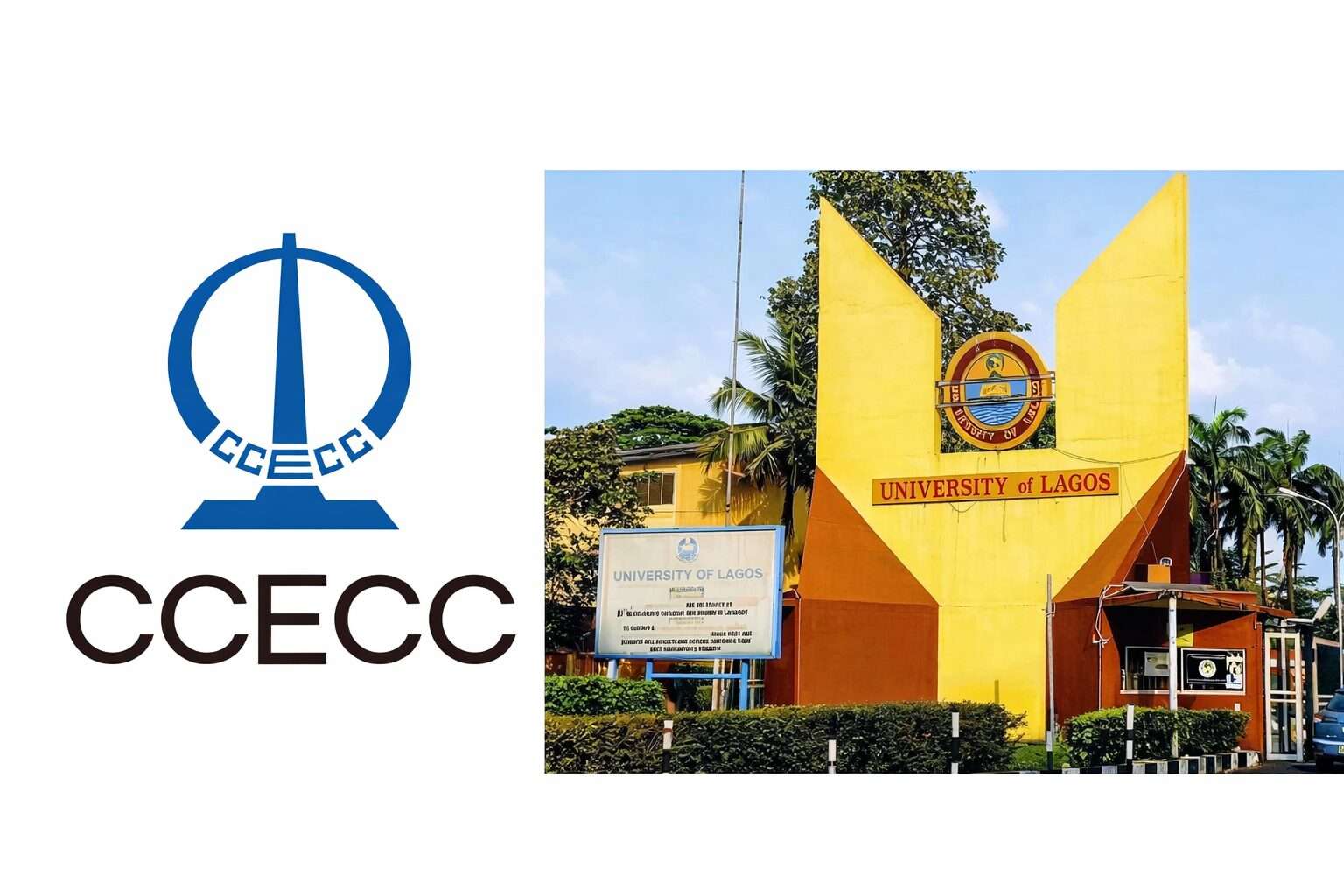
China Civil Engineering Construction Corporation (CCECC) has secured the contract to construct a 7-megawatt floating solar power station for the Federal University of Lagos (UNILAG), marking a major milestone in Nigeria’s renewable energy journey.
The project, announced by CCECC in a statement shared on social media on Monday, will be installed on the lagoon waters surrounding the UNILAG campus. Once completed, it will become Nigeria’s first floating solar power station and the first of its kind within any tertiary institution in the country.
According to CCECC, the facility is designed to provide the university with a steady supply of clean, safe, and reliable electricity. This is expected to significantly reduce UNILAG’s dependence on diesel-powered generators and other fossil-fuel energy sources, which are commonly used across Nigeria due to persistent power shortages.
Floating solar technology involves mounting photovoltaic panels on water bodies rather than on land. Beyond conserving valuable land space, the water helps cool the panels naturally, improving their efficiency and overall performance. Globally, floating solar systems are gaining traction as an innovative response to energy demand, especially in regions facing land constraints and unreliable power supply.
For Nigeria, the UNILAG floating solar project represents a practical solution to long-standing electricity challenges. Only about half of the country’s population has access to grid power, and many institutions and businesses still rely heavily on expensive backup generators. Renewable energy projects like this are increasingly viewed as a sustainable alternative.
The initiative also aligns with the Federal Government’s broader push to expand renewable energy across public institutions. In 2025, the Federal Executive Council approved major electrification projects under the Energizing Education Programme, which includes solar hybrid power systems for eight federal universities. Earlier phases of the programme successfully delivered solar mini-grids to campuses such as the University of Abuja and the University of Nigeria, Nsukka.
With the floating solar station at UNILAG, Nigeria takes another step toward cleaner energy solutions in the education sector. The project not only promises to improve power reliability for one of the country’s leading universities but also sets a precedent for innovative renewable energy adoption across the nation.
Discover more from Scoop Hub
Subscribe to get the latest posts sent to your email.