Russia’s Growing Influence in Africa: A New Chapter in Geopolitical Alliances
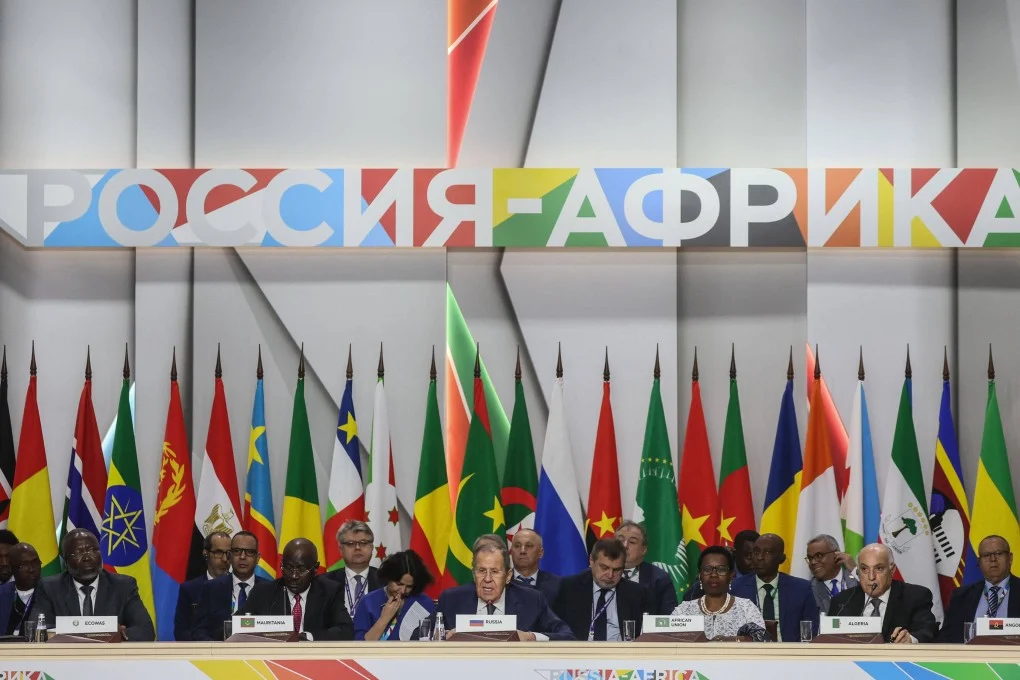
In a recent summit in Sochi, Russian President Vladimir Putin reaffirmed Moscow’s “total support” for African nations, particularly in the areas of counterterrorism, economic development, and crisis response.
His message, delivered by Foreign Minister Sergei Lavrov to African foreign ministers, emphasized Russia’s commitment to a partnership with Africa based on mutual respect and cooperation, free from the perceived interference that often accompanies Western aid.
Several African governments, especially those disillusioned with traditional Western allies, are increasingly looking to Russia for support. The trend reflects a broader shift, as countries like Burkina Faso and Mali, both former French colonies, express frustration with their historical alliances, BBC.
Burkina Faso’s Foreign Minister Karamoko Jean-Marie Traoré openly stated that Russia is a more reliable partner than France, echoing sentiments shared by Mali’s Foreign Minister Abdoulaye Diop. Diop criticized Western powers’ “neo-colonial” attitudes, contrasting them with what he described as the Kremlin’s “sincere” partnership.
In addition to military support, Mali and Russia are collaborating on projects in energy, telecommunications, technology, and mining. Diop highlighted Russian companies’ involvement in these sectors, working alongside the Malian government and private partners to address local needs. The two governments, he added, are committed to accelerating these joint initiatives to produce tangible benefits.

Russia’s military presence in Africa has expanded rapidly, largely through the activities of Wagner mercenaries, now rebranded as the “Africa Corps” under the Russian defense ministry. Wagner forces, who replaced French and UN troops, are the preferred choice of some African junta leaders, especially those in Burkina Faso, Mali, and Niger.
READ ALSO: Trump and Putin Conversation Highlights Tensions as Biden Prepares Transition Talks
Unlike Western aid, which often comes with conditions related to governance or human rights, Russia’s assistance typically comes with a promise of non-interference in a nation’s internal affairs. In return, African governments grant Russia access to valuable resources.
However, despite this military support, progress against Islamist insurgents in these regions has been limited. Yet, the Kremlin continues to view these partnerships as a strategic win, with Russian officials boasting of increased cooperation and countering Western hopes for Moscow’s diplomatic isolation.
Russia’s involvement in Africa is not a recent development. Emanuela Del Re, the European Union’s special representative for the Sahel, pointed out that Russia has historical ties with Africa, dating back to the pre-independence era, BBC News.
Despite her view that Russia remains a “malicious actor” with potentially destabilizing intentions, Del Re acknowledges the pragmatism of African leaders, who are now diversifying their partnerships amid growing international interest in the continent.
The Sahel region, while seemingly barren, has become a geopolitical hotspot. Saudi Arabia, Turkey, Iran, and several European countries are actively engaged in the region, contributing to what Del Re described as a “crowded” arena of influence.
She emphasized that the West should not see Africa’s alliances as a competition, noting that the EU still has an important role to play in Burkina Faso, Mali, and Niger, which have each experienced political upheaval in recent years.
Russia’s influence extends beyond military cooperation. African nations like Rwanda have entered into agreements with Moscow to bolster their energy infrastructure, including nuclear power projects.
Rwanda’s Foreign Minister, Olivier Nduhungirehe, highlighted the significance of the nuclear science education Rwandan students are receiving in Russia, which he believes will play a vital role in Rwanda’s energy future. Rwanda’s collaboration with Russia underscores the desire among African countries to develop self-sustaining energy solutions and reduce dependency on Western support.
Five years ago, Putin pledged to double trade with Africa. While that goal remains unrealized, Russia has managed to expand its footprint across the continent through strategic partnerships, often leveraging military assistance in exchange for natural resources. This approach has led to increased Russian influence, although some Western observers argue it risks destabilizing the continent.
READ ALSO: Asian Markets Slide as China’s Stimulus Package Falls Short of Expectations

The Russian government continues to champion its “friendship” with Africa, but significant questions remain about the sustainability and effectiveness of this partnership. As African countries work to strengthen their economies and address security threats, they may find Russia’s support valuable in the short term.
However, the long-term impact of these partnerships, and the balance between stability and sovereignty, will ultimately determine whether Moscow’s approach will succeed.
In an era of shifting alliances, Africa’s evolving relationship with Russia signals a redefinition of global power structures, with African nations asserting their right to diverse partnerships and diplomatic independence. The coming years will be critical in shaping Africa’s geopolitical trajectory as it navigates new alliances and fosters its economic resilience on its own terms.
Discover more from Scoop Hub
Subscribe to get the latest posts sent to your email.